
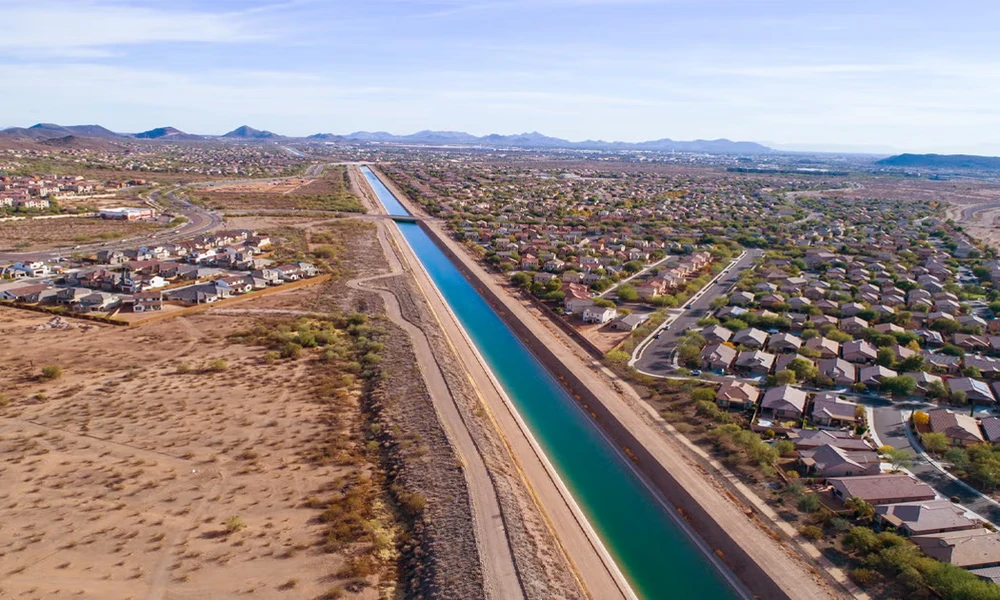

Most Arizona policies get sold with a template. Fire, wind, theft, liability, done. Move along. That template was built for a country where basements flood and ice dams form on the roof in February.
If you live in Phoenix, Tucson, or a subdivision carved into the foothills outside Prescott, that template leaves real gaps. Not because your agent is lazy, but because the risks that actually threaten an Arizona house do not match the ones baked into a standard form. So here’s the deal: the climate you live in should decide the coverage you carry, and Arizona’s climate is genuinely weird.
This piece walks through what a monsoon does to a roof, why dust and heat quietly age your systems, how wildfire risk changes the math outside city limits, and the specific questions to ask before you renew. By the end you’ll know which endorsements are worth the premium and which ones you can skip.
What a monsoon actually does to your house
Arizona’s summer monsoon is not a gentle rain event. It’s a wall of wind, dust, and water that shows up in the span of twenty minutes and then vanishes. The National Weather Service tracks these storms every year, and the pattern is consistent: microburst winds, flash flooding in washes that were bone dry an hour earlier, and hail that dents everything it touches.
Here’s the part that catches people. Wind-driven rain gets pushed sideways into places rain never reaches on its own. It finds the gap around a poorly seated window, the shoddy flashing where your patio cover meets the stucco, the attic vent that looked fine from the ground. You won’t notice for weeks. Then a ceiling stain appears, or the drywall behind a closet starts to swell.
So check your policy for how it handles wind and hail, because some carriers treat those as separate deductibles rather than part of your main one. A percentage deductible on a $450,000 home is real money, and it’s the kind of thing you want to understand before a storm, not after. More on that in the National Weather Service’s storm resources at nws.noaa.gov, which explains the mechanics of monsoon wind events better than any brochure.
My take, after watching how these claims play out: most Arizona homeowners are underinsured on the roof and overinsured on the contents. Replacement cost for a tile roof that took a microburst hit runs into five figures fast. Your television does not.
Heat, dust, and the slow damage nobody files a claim for
Desert heat doesn’t break your house in one dramatic moment. It wears it down. Roof underlayment bakes and becomes brittle years before the tiles above it fail. HVAC compressors cycle harder and die earlier. Expansion and contraction works on stucco cracks, and those cracks invite water in during the next storm.
The trouble is that gradual deterioration isn’t a covered peril. Your policy responds to sudden, accidental events. A roof that slowly cooked itself into failure over fifteen years is a maintenance issue, and your carrier will say so politely in writing.
What you can do is stay ahead of it. Crawl into the attic twice a year and look for daylight through the roof deck. Get the underlayment inspected on a schedule, not when the ceiling sags. Trim anything within ten feet of the structure, because dry vegetation next to a wall is a bridge for both fire and pests.
It’s worth knowing that the insurance industry studies these loss patterns constantly. The Insurance Information Institute publishes research on how climate-driven claims have shifted over time, and it’s a useful gut check when a carrier tells you something is or isn’t typical.
Wildfire risk outside the metro areas
If your house sits in the wildland-urban interface, meaning trees, brush, or open desert push right up against your property line, you’re playing a different game than someone in central Mesa. Insurers have gotten much more careful about this. Some have pulled back from high-risk zones entirely, and others write the policy but attach conditions.
What matters to an underwriter is defensible space and roof class. A Class A roof assembly, cleared vegetation within a reasonable perimeter, and a visible maintenance habit all improve how your property gets rated. None of that is glamorous. All of it affects your premium.
You can also request a wildfire-specific endorsement if your standard policy feels thin. It’s not offered everywhere, and it’s not cheap, but in the foothills north of Phoenix or the canyons around Sedona it’s often the difference between a check and a fight.
A simple checklist before you renew
You don’t need a spreadsheet. You need twenty minutes and a few honest answers.
- Read your deductible page and confirm whether wind, hail, and named storms carry separate percentage deductibles.
- Check that your dwelling limit reflects today’s rebuild costs, not the price you paid for the house in 2019.
- Confirm whether your policy is replacement cost or actual cash value on both the structure and your belongings. This one line changes your payout dramatically.
- Ask specifically about water backup, since monsoon flooding that enters through a drain or sump isn’t the same as a flood policy claim.
- Verify your liability limit. A pool, a trampoline, or a dog changes your exposure more than most people assume.
- Walk the exterior after every storm season and photograph anything new.
That last item sounds fussy. It isn’t. A dated photo of a hairline crack is worth more than a memory when a claim gets reviewed.
Where the right policy actually comes from
Generic online quoting engines will hand you a number in ninety seconds. That number is built on averages, and your house is not an average. An agent who writes Arizona policies every week knows which carriers handle monsoon claims without a fight, which ones rate tile roofs fairly, and which endorsements are worth the money in your specific zip code.
That’s why matching the policy to the place matters so much. When you’re comparing options for homeowners coverage Arizona residents actually need, the conversation should start with your roof, your vegetation, and your deductible structure, not with a discount for bundling auto.
One more thing worth checking: the people who inspect, repair, and reroof these homes are a real industry, and according to the Bureau of Labor Statistics construction and extraction occupations remain a large share of the workforce in growing states. When you need a repair done right after a storm, you’re competing for that labor. Another argument for coverage limits that reflect current costs rather than yesterday’s.
The short version
Arizona doesn’t reward copy-paste insurance. It rewards specificity. Monsoon wind, baking heat, wildfire exposure, and fast rebuild costs all push on your policy in different directions, and the only way to get it right is to name those pressures out loud and match coverage to them.
So pull out your declarations page this week. Find your wind deductible. Find your dwelling limit. If either one makes you squint, you’ve found your next phone call.








Leave a Comment