
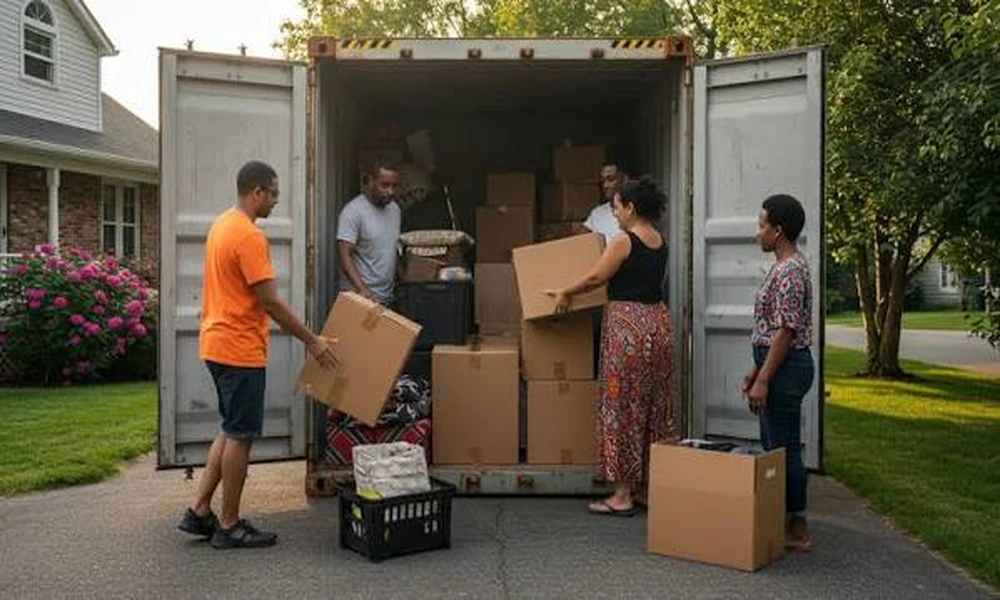

Forty-seven million square feet of new storage space opened across the U.S. in a single recent year. That number doesn’t happen in a vacuum. It happens because kitchens are packed, garages are unusable, and the spare bedroom already has three jobs. Americans aren’t becoming hoarders overnight. Their homes are just getting smaller while their lives are staying the same size.
This piece walks through what’s actually driving the self storage surge, who it’s hitting hardest, and what you should think through before you rent. The decisions you make at the start save money and headaches for the months that follow.
The Space Squeeze Cycle
Here’s a framework worth keeping in mind before you do anything else: the Space Squeeze Cycle. It has four stages, and once you see it, you’ll recognize it everywhere.
Stage one is accumulation. Households collect belongings at a pace that outstrips their square footage, often without noticing until a closet becomes impassable. Stage two is compression. Items get stacked, doubled up, or crammed into whatever space exists. The guest room becomes a warehouse. The garage becomes a maze. Stage three is friction. Daily life gets harder. Finding things takes longer. Frustration builds. And stage four is release, usually through a storage unit or a serious purge.
Most people hit stage three and stay there for months before acting. Understanding the cycle means you can short-circuit it instead of letting it run long.
Moving Less, But Still Running Out of Room
One counterintuitive piece of this story: Americans are moving less often than they used to, but that hasn’t reduced the demand for extra space. According to the U.S. Census Bureau’s American Community Survey, the percentage of Americans who moved to a different residence in 2024 was 11.8 percent, the lowest recorded rate in modern data-keeping history.
That number matters because moving used to be the primary trigger for renting storage. You’d pack up, put half your stuff in a unit, close on the new place, and clear it out within a few months. But when people aren’t moving, they’re not editing their belongings either. They’re staying put in homes that no longer fit their lives, and the overflow has to go somewhere.
The result is a different kind of renter: someone who isn’t mid-move at all, but just out of space. This person tends to hold onto a unit far longer. Average customer length of stay has climbed past 18 months in recent data, up notably from the figures seen just a few years ago.
The Home-Size Math Nobody Talks About
Consider a family in a mid-size Sunbelt city. Call them the Garcias. Three kids, two remote-working adults, a dog, and about 1,900 square feet. They bought their home in 2019 when that felt like plenty. Since then, one kid moved back from college, a home office took over the dining room, and the garage became a permanently cluttered workspace. Nothing dramatic happened. Life just kept adding layers.
They’re not unusual. The average size of a new single-family home dropped to 2,150 square feet in 2024, down from nearly 2,500 square feet a decade ago, according to Harvard University’s Joint Center for Housing Studies via AZ Big Media , and many existing homes are considerably smaller than that. For older neighborhoods or first-time buyer purchases, 1,400 to 1,700 square feet is common.
The stuff, though, hasn’t shrunk. Tools for hobbies, seasonal gear, furniture from a parent who passed away, inventory from a side business. These items are real, they have value, and they need somewhere to live.
What People Actually Store (And How Long They Keep It)
Furniture and clothing consistently top the list of stored items nationally. After that come sporting goods, business inventory, seasonal decorations, and electronics. The split matters when you’re choosing a unit size and climate control level, because not everything responds the same way to heat and humidity.
| Item Category | Climate Control Needed? | Suggested Unit Size |
|---|---|---|
| Clothing and textiles | Yes | 5×5 or 5×10 |
| Wooden furniture | Yes | 10×10 or larger |
| Metal tools and equipment | No | 10×10 |
| Business documents and inventory | Recommended | 10×15 or 10×20 |
| Seasonal decorations | No | 5×5 |
| Full household contents (move) | Yes | 10×20 or 10×30 |
This table assumes a general Southeastern or Gulf Coast climate. If your area runs hot and humid for six months a year, the “No” items in that column are worth reconsidering. Humidity does real damage to metal over time.
Climate Control: Not Optional in Hot Climates
Renters in Southern states consistently underestimate what summer heat does inside a standard steel unit. Interior temperatures in non-climate-controlled units can exceed outdoor temps significantly on hot days. Wood warps, upholstery molds, photographs yellow, and electronics degrade faster than you’d expect.
“Temperature fluctuations are the single biggest cause of preventable damage in self storage. Most people think their belongings can handle the heat because they’re ‘just stuff.’ They find out otherwise when they open the unit six months later.”
Industry consensus reflected in operator training resources across the Self Storage Association
Climate control costs more per month, but it’s considerably cheaper than replacing a warped dresser or a box of photographs that grew mold. In humid Southern markets, it’s the default choice worth paying for.
A Practical Checklist Before You Sign
Most people rush this part. They find a place nearby, rent the smallest unit they think they’ll need, and end up upgrading within 60 days. Slow down here and save that hassle.
- Walk your home first. Go room by room and physically identify everything you plan to store. Don’t estimate from memory.
- Add 20% to your mental unit size. Items never pack as efficiently in a storage unit as they do when you’re imagining it.
- Decide on climate control before you look at prices. If you make it a budget decision, you’ll probably get it wrong.
- Check gate hours against your schedule. A facility with access hours that don’t match your day-to-day routine will frustrate you fast.
- Ask about month-to-month leasing. Locking into a long-term contract for what you assume is a short-term need rarely works in your favor.
Once you’ve run through that list, searching for a storage unit near me with specific criteria in hand is a completely different experience than searching cold. You’ll know exactly what to filter for and what questions to ask when you call.
The Decision Most People Delay Too Long
The Space Squeeze Cycle is almost always slower to start and faster to resolve than people expect. Stage one builds quietly for months. But once someone actually rents a unit and moves items out of the house, the relief is usually immediate. Rooms get their function back. Work-from-home setups improve. Garages become usable again.
The main thing standing between most people and that outcome isn’t cost or availability. It’s the inertia of thinking they’ll deal with it next month. If you’ve read this far, your next month is now. Pick a size, decide on climate control, and look for a facility close enough that you’ll actually use it.








Leave a Comment